In a small apartment, every piece of furniture takes up precious floor. A chair is a chair, a table is a table, and the room fills up fast while storage stays at zero. The space feels crowded because the furniture is only doing one job each, in a home where everything needs to do two. The right storage furniture ideas change that math: the pieces you already need start holding the things that have nowhere to go.
A bench that hides blankets, a bed with drawers underneath, and a coffee table with shelves can give a small apartment the closets it never had, without adding a single extra piece. Storage furniture for small apartments works best when it is chosen piece by piece, by what needs a home and by what to check before you buy.
You do not need to replace everything you own. Start with the piece that bothers you most, and let each new piece earn its place by doing two jobs, in your own style.
First, what to check before you buy storage furniture for small apartments
Before you shop, walk through your apartment and write down what has no home: blankets, shoes, books, games, off-season clothes, cleaning supplies, the kids’ things. That list tells you which double-duty pieces you actually need, because storage furniture only helps when it stores your real things, in the room where you use them.
Whatever the piece, check the same things before you buy. Measure the inside, not just the outside: the depth of the drawers, the space under the lid, the height of the shelves, against the things that will live there. Open and close every moving part, because lids, hinges and drawer slides are what fail first, and if you buy new, test them again before the return window closes. Feel the weight, and picture the piece coming through your front door, up the stairs and around the corners, because a piece you cannot move is a piece you may have to leave behind one day. Storage furniture is also one of the easiest things to buy secondhand, and the same checks matter even more there: work every mechanism slowly, and look for wobble, cracks and missing hardware before you pay.
1. A storage ottoman
The storage ottoman is the hardest-working piece in a small living room: a footrest, extra seating when guests come, and a hiding place for blankets, games and remotes, all in one soft cube. We use the same piece as a coffee table in our small apartment storage ideas. Before you buy, measure the inside against a folded blanket, because a shallow ottoman holds less than it promises. Check the lid hinge too: with kids at home, choose a slow-close or lid-support hinge, so the lid cannot slam shut on small fingers. And choose a fabric and color you love, because you will see it every day in the center of the room.
2. A storage bench for the entryway or the foot of the bed
A bench with storage inside gives daily things a home and gives you a seat while you put on shoes. In the entryway it holds scarves, bags and dog supplies, and it pairs well with the drop zone in our tiny entryway ideas. At the foot of the bed it hides extra sheets and blankets and makes the bed look finished. Check the inside depth against the shoes or blankets it will hold, and sit on it before you buy: you will put your full weight on it every day, so the seat should feel solid, with no sag or creak. The lid needs the same care as the ottoman’s: a slow-close or lid-support hinge keeps it from slamming, which matters in a home with kids.
3. A bed with drawers or lift-up storage
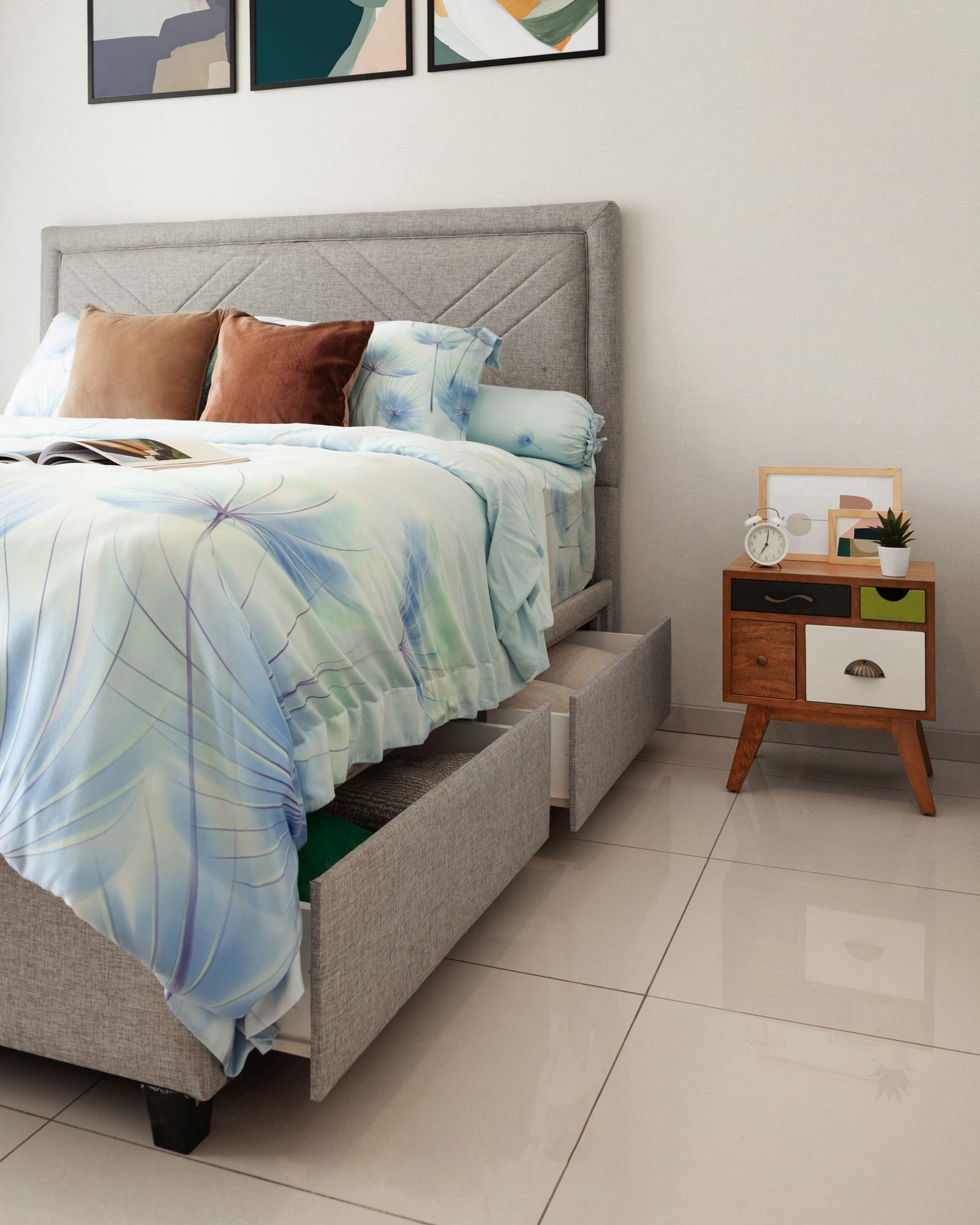
The bed is the biggest piece of furniture in the home, so it should store the most. Drawers under the bed or a lift-up frame hold off-season clothes, spare bedding and suitcases, and this one piece can free an entire dresser in a small bedroom. If your current bed stays, our under-bed storage ideas cover the space beneath it. Before you buy a storage bed, measure the pull-out room beside it, because drawers need clear floor to open. On a lift-up frame, the gas lift can pinch, so keep your hands clear of the mechanism, and lift it several times in the store to check that it rises smoothly and stays up on its own. This is also the heaviest piece on this list, so measure your doors, stairs and corners before you order it.
4. A coffee table with shelves, drawers or a lift top
A plain coffee table wastes the space under its top. One with a shelf or drawers keeps books, coasters, chargers and board games close to the sofa and out of sight, and a lift top rises to meet you when you eat or work from the sofa. The top stays clear, and a clear coffee table makes the whole living room feel calmer. Before you buy, work the moving part: a lift top should rise and lower smoothly and hold its height without wobbling, and drawers should slide without sticking. Check the closed height against your sofa seat too, because a table that sits too high or too low feels wrong every single day.
5. A cube organizer with baskets
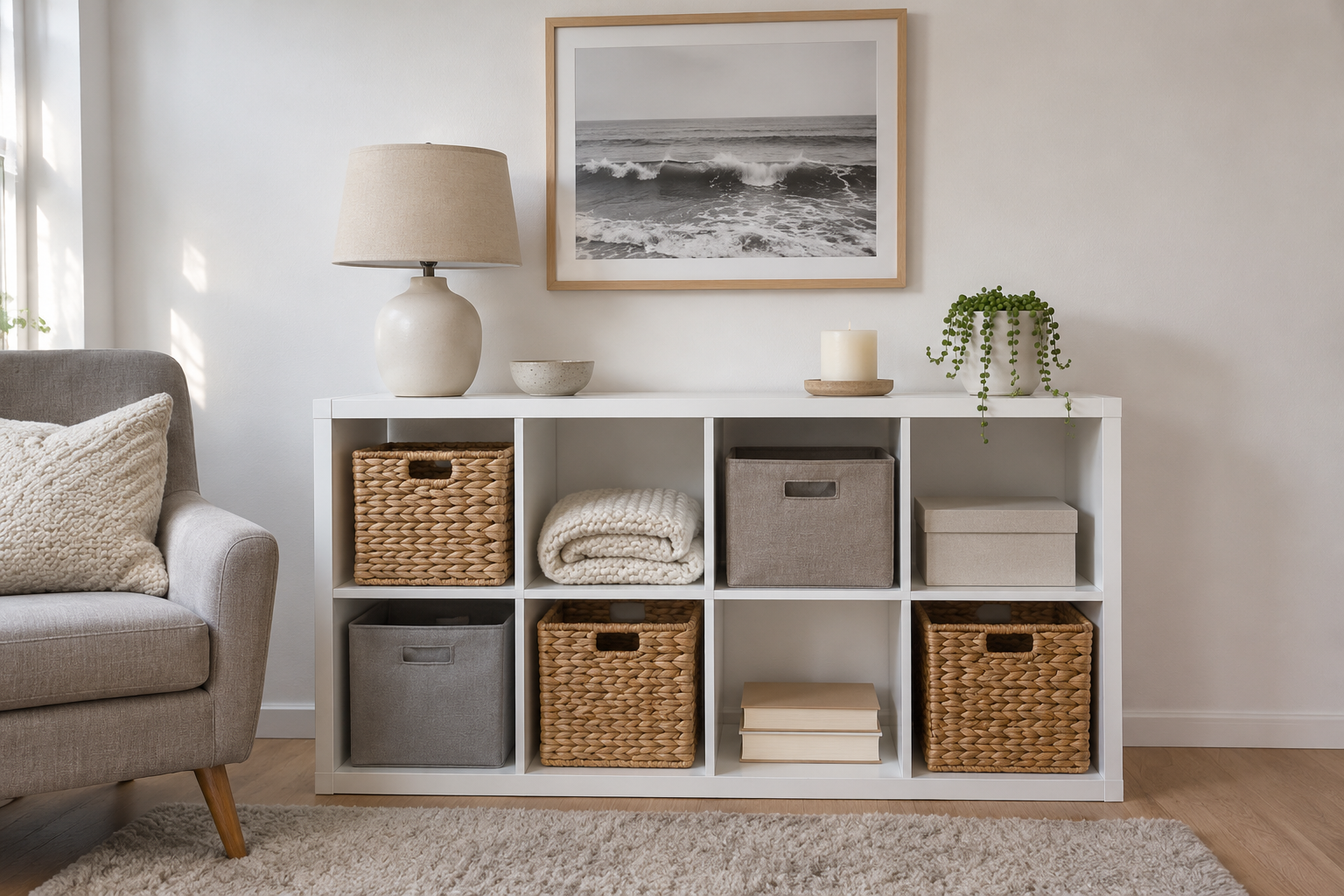
Cube organizers are affordable, flexible and easy to find in any style. With baskets in some cubes and books or pretty objects in others, one unit can hold toys, craft supplies, clothes or a small pantry, and it works in a living room, a bedroom or a hallway. Before you buy, measure one cube against the bulkiest thing it will hold, and measure the baskets to the cubes, because the two are sold separately and do not always match. One safety note matters with taller units: anchor the unit with an anti-tip strap, which takes one or two small screws into the wall. Ask the landlord first, patch the tiny holes when you leave, and keep the heaviest things on the lowest cubes.
6. A TV console with closed doors
The TV stand is already standing in your living room, so it may as well store. A console with closed doors hides the streaming boxes, game consoles, cables and remotes that make a room look busy even when it is clean, and closed doors calm the whole wall. Before you buy, measure the inside depth against your biggest box, and check the back panel for openings, because electronics need room for cables and air. Open and close the doors and look at the gaps: doors that close flush and even will keep closing that way, and on a secondhand console the hinges are the first thing to check.
7. A sofa bed or a daybed
A sofa bed gives guests a real place to sleep without a guest room. A daybed works as a sofa by day and a bed by night, which makes it perfect for a studio or a child’s room that doubles as an office. Before you buy, open the sofa bed all the way, in the store, and lie on it if you can: the mechanism should unfold without a fight, and the mattress should feel like something a guest can actually sleep on. Measure the room with the bed open, because it needs the floor in front of the sofa clear every night. A sofa bed is heavy, so check the door and stair measurements before it arrives, and on a daybed with a trundle, roll the trundle in and out to be sure it moves smoothly.
8. A low bookshelf that divides the room
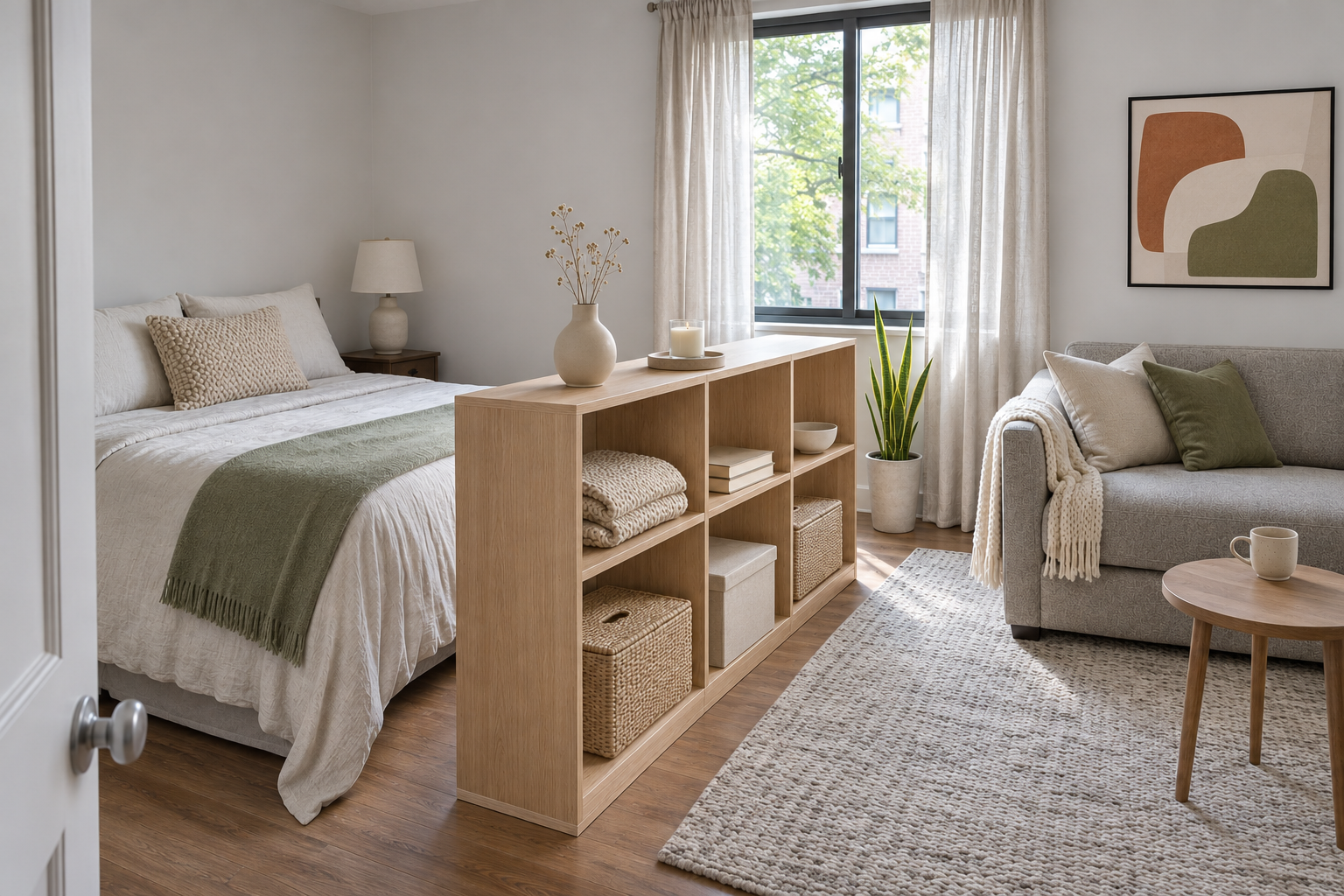
In a studio or an open living room, a bookshelf placed across the space creates two rooms out of one: sleeping on one side, living on the other, and every shelf stores books, baskets and pretty things while it divides. Our studio apartment layout ideas use the same move to build a bedroom corner. Choose a low, wide bookcase for this job, around waist height. A divider cannot be anchored to a wall, so a tall, narrow shelf standing alone can tip, and low and wide is the safe shape. Load the heaviest books on the bottom shelves, and leave the top light. Open shelves keep the light flowing from one side to the other, so the apartment still feels airy.
9. A drop-leaf or fold-down table
A table that folds smaller respects a small dining area. Drop leaves open for dinner with friends and fold down for daily life, and a wall-mounted fold-down table disappears completely when the meal ends. Our small home office ideas make the same honest point about folding desks. Before you buy a drop-leaf, raise and lower each leaf and lean a little weight on it: the hinges and supports should hold the leaf level, with no dip. A wall-mounted fold-down table needs screws into a stud or proper anchors, because it carries weight and gets leaned on, so renters should ask the landlord first, and choose the freestanding drop-leaf when the answer is no.
10. A storage headboard
A headboard with shelves or small cabinets holds the nightstand things, like books, glasses, a phone charger and a glass of water, right at the bed. That can remove the need for nightstands entirely in a very small bedroom, or calm the clutter on the ones you have. Before you buy, measure the shelf depth against a real book and a water glass, because some headboard shelves are shallower than they look. Open the little cabinets and check that the doors clear your pillows, and confirm the headboard fits your bed frame and leaves the bed where it stands, since some models ask the bed to sit a few inches out from the wall.
11. A trunk or sturdy chest as a side table
A trunk beside the sofa or at the end of a hallway stores blankets, photo albums or seasonal decorations, and its flat top works as a side table for a lamp and a cup of tea. Before you buy, check the lid: it should stay open on its own while you reach inside, and with kids at home, a slow-close or lid-support hinge keeps it from slamming on small fingers. On a secondhand trunk, smell the inside and look at the lining, because a musty trunk will share that smell with everything you store in it. Check the top is flat and sturdy enough for a lamp, and the whole piece feels steady on the floor.
Start with the list of what needs a home, check the inside measurements and the moving parts, and let one piece at a time start doing two jobs. A small apartment furnished this way holds more, looks calmer, and still leaves room to live. Pick the piece your home needs most, and let it earn its place from the first day.
New to The Cozy Footprint? Start with our free Cozy Home Starter Kit, a short printable set of simple pages for a calmer, cozier small home.