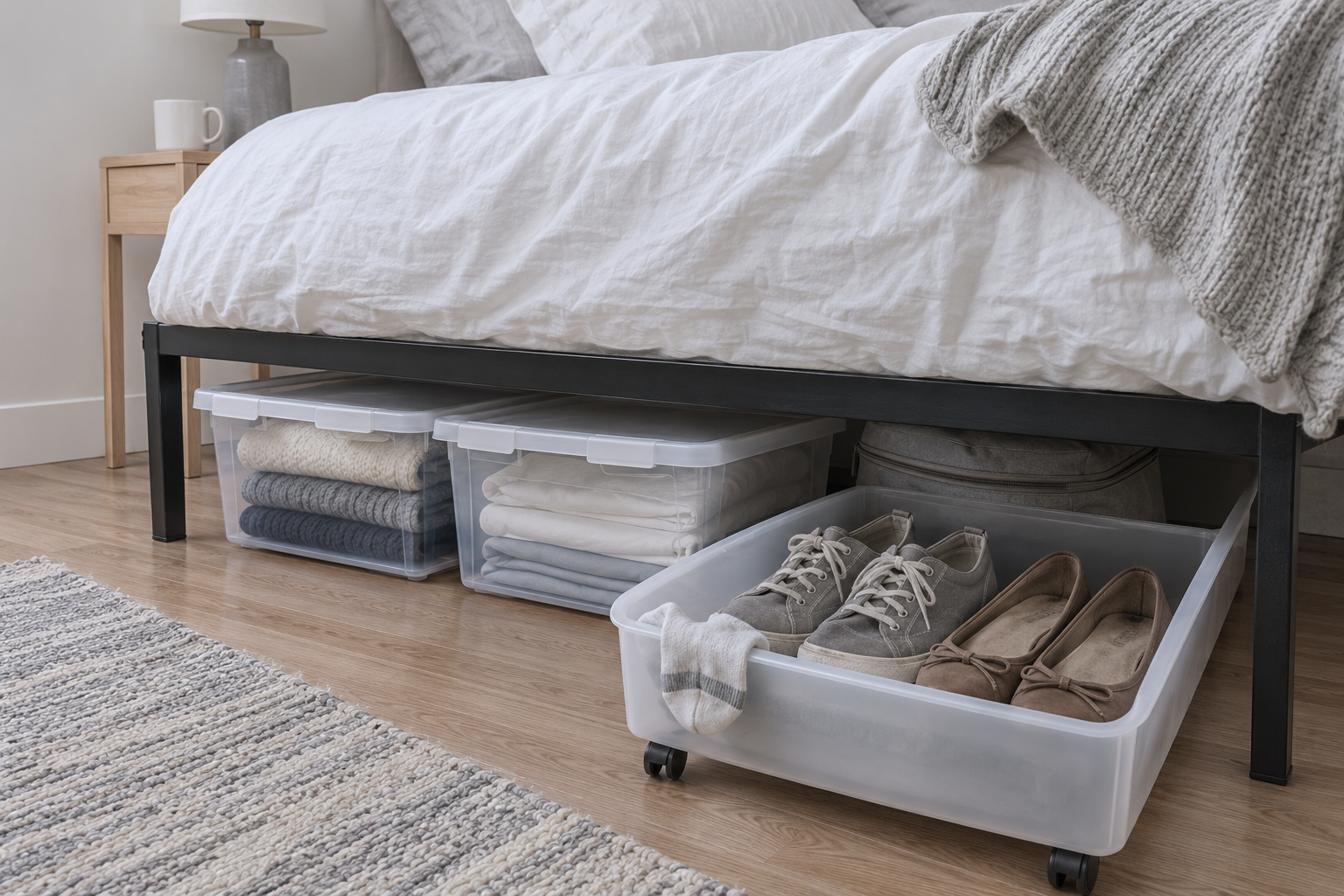
In a small bedroom, the closet is tiny, the dresser is full, and a pile of things still has nowhere to go. Blankets land on a chair, shoes spread across the floor, and off-season clothes sit in a corner bag for months.
Meanwhile, a wide, flat space sits empty right under the bed. With a simple plan, it can hold the things that crowd the rest of the room. Picture getting out of bed in the morning and putting your feet down on a clear floor, with no shoes waiting in your way.
This guide is cheap and renter friendly. Nothing here needs built-in drawers, a new bed, or permission from a landlord. It goes deep on the space under the bed; for the rest of a bedroom with no closet, see our small bedroom storage ideas.
First, pull everything out and sort what you find
Before you buy a bin, pull everything out from under the bed and vacuum the empty space. Sort what came out: keep in the bedroom, belongs elsewhere, give away, and throw out. Start fresh with only what truly belongs in the room.
1. Measure the clearance before you buy anything
Under-bed storage fails most often because the container is too tall. Measure from the floor to the bottom of the frame, plus the width and length of the open space, and take those numbers shopping. Many frames leave about 6 to 7 inches of clearance, some 10 inches or more. Leave a little extra room so containers slide without scraping.
If your frame sits too low, bed risers can lift it by a few inches. Choose sturdy risers made for your frame type, set every leg fully into its riser, and check that the bed feels solid with no wobble before sleeping on it. Skip risers on an unstable frame, and follow the weight limits on the package. One more check: risers raise the whole bed, so make sure the new height still works for kids, or for anyone in the home who needs a lower bed.
2. Use rolling drawers for things you reach for often
Rolling drawers and wheeled bins suit items you use every week, like shoes, pajamas, workout clothes, or extra towels. The wheels let you pull the whole drawer toward you instead of crawling on the floor. They cost a bit more than plain bins, so save them for the edge of the bed, where you will open them most.
3. Use flat bins and zippered bags for things you reach for rarely
Flat plastic bins with lids suit items you pull out a few times a year, like holiday bedding or guest sheets. The lid keeps dust off, and the flat shape stacks well if clearance allows. Soft zippered bags suit spare blankets or sweaters, because they flex a little and squeeze under lower frames.
A simple rule helps: hard bins protect and stack, soft bags flex and forgive, and rolling drawers win when you open them often.
4. Shrink bulky clothes and bedding with vacuum bags
Off-season clothes, winter coats, and spare comforters are mostly air. Vacuum bags press that air out and turn a bulky pile into a flat package that slides under almost any bed. Label each bag with its contents and the season before you seal it. When the season changes, let the items fluff back up and wash anything that needs freshening.
One honest caution: long compression can crease delicate knits and flatten down and feather fills, so keep breathable storage bags for those pieces and save the vacuum bags for sturdier things. We use the same approach for the closet side in our tiny closet organization ideas.
Cozy Footprint Tip: Keep a small card inside each vacuum bag listing what went in. Months later, you will not have to open three bags to find one coat.
5. Divide the space under the bed into zones
Give each area under the bed a job. Keep daily and weekly things along the side where you stand each morning. Place seasonal and rarely used things toward the center and the foot, where they are harder to reach. If two people share the bed, each person can claim the side closest to them. A zone plan stops one missing item from turning into a full search. In a studio, the bed is the sleep zone of a one-room home, and the same zone plan keeps that corner calm; our studio apartment layout ideas show how the zones fit together.
6. Label every bin so nothing disappears
Things vanish under the bed because every bin looks the same in the dark. A clear label on the end of each bin, facing out, fixes that. Write the contents in large letters: winter sweaters, guest sheets, gift wrap, spare towels. Labels work even with solid bins and soft bags, and masking tape with a marker does the job for free.
7. Keep everyday shoes on a low open tray on your side
Shoes you wear daily should stay easy to grab. A low open tray or a shallow rolling frame on your side of the bed holds two or three pairs for the morning, while extra pairs live in a closed bin further back. The tray keeps daily shoes off the bedroom floor, and the closed bin keeps the rest clean and out of sight. Trays and shoe organizers are easy to find secondhand.
8. Store gift wrap and craft supplies flat
Gift wrap rolls, tissue paper, ribbons, and craft paper are awkward in closets because they are long and light. Under the bed is their natural home. A long flat bin keeps rolls from bending, and a zippered bag can hold cards, tape, scissors, and tags beside them. Keep this zone near the foot of the bed.
9. For kids, use the space for toy rotation bins
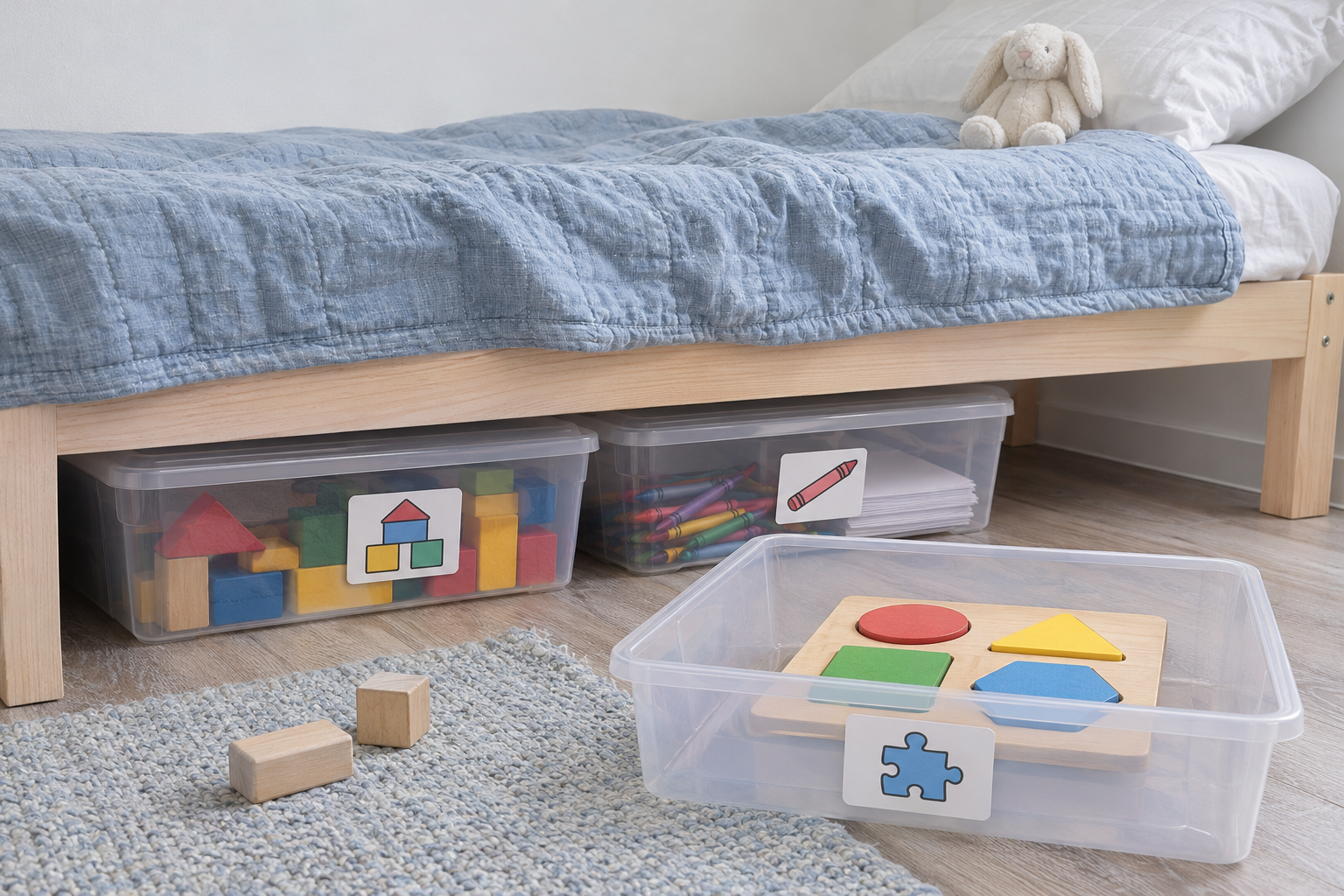
In a child’s room, under-bed bins are perfect for rotating toys. Fill two or three flat bins with different sets: blocks, art supplies, puzzles and games. Keep one set out and store the rest under the bed. Swap every week or two, and stored toys feel fresh again. Label each bin with a picture as well as a word, so younger children can find and return their own things.
Cozy Footprint Tip: Toy rotation makes cleanup simpler. When a bin is full, that set is complete, and loose pieces have a clear place to go back to.
10. Know what should never go under the bed
Heavy items are hard to slide and can strain your back or scratch the floor. On carpet, bins slide better with felt pads underneath or a flat base. Daily items should never be buried in the center, where you cannot reach them. Anything damp, like a towel that never fully dried, can turn musty and affect items around it, and a closed plastic bin can trap that moisture, so only store things that are fully dry. Important papers, electronics with batteries, and food also belong elsewhere.
11. Keep dust under control with lids and a quick habit
Dust gathers under beds in every home. Lidded bins and zippered bags keep stored things clean, so choose closed containers over open baskets for anything stored for more than a few weeks. Slide the bins out and vacuum or use a flat mop under the bed when you change the sheets, or at least once a month.
12. Hide it all with the right bed skirt or frame choice
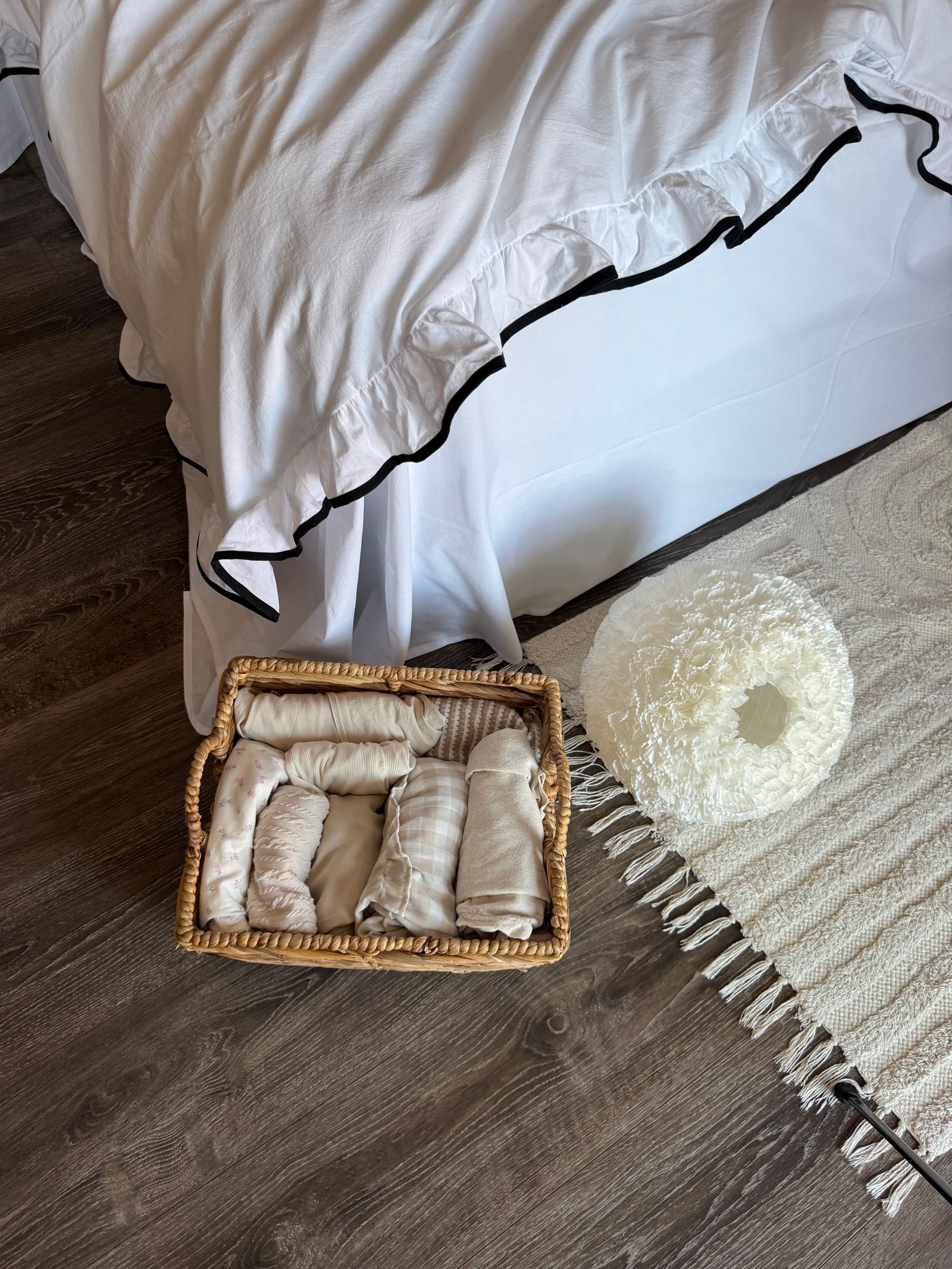
A bed skirt that reaches close to the floor hides bins and bags while still lifting easily when you need something. A frame with a solid side panel can give the same covered look. Choose a washable fabric in a color that works with your bedding and your style. Renters can use a wrap-around elastic skirt that needs no pins and leaves no marks, and a basic skirt is a budget-friendly find.
Under your bed there is already room for the blankets on the chair, the shoes on the floor, and the clothes in the corner bag. Measure first, choose containers that fit the way you live, and label them clearly. Soon the floor is clear, your things are easy to find, and the first step out of bed each morning lands on open floor.
New to The Cozy Footprint? Start with our free Cozy Home Starter Kit, a short printable set of simple pages for a calmer, cozier small home.