A tiny kitchen runs out of counter space fast, and the right small kitchen storage ideas can win it back without a remodel. A cutting board, a dish rack, a coffee maker, and a few jars, and suddenly there is no room left to actually cook. The kitchen usually feels small for one simple reason: too many things live on the counter because they have no real home anywhere else.
This is the room where clutter starts early in the day. When the kitchen looks crowded, the mind and the heart start to feel crowded too, and cooking turns into a chore. When everything has a place, the same tiny kitchen feels calmer, and even making coffee feels pleasant. A small kitchen can still feel cozy and pretty, in your own style, with room to breathe.
You do not need a remodel or a big budget for this. Most of these ideas use space you already have: walls, doors, the insides of cabinets, and the gaps everyone forgets.
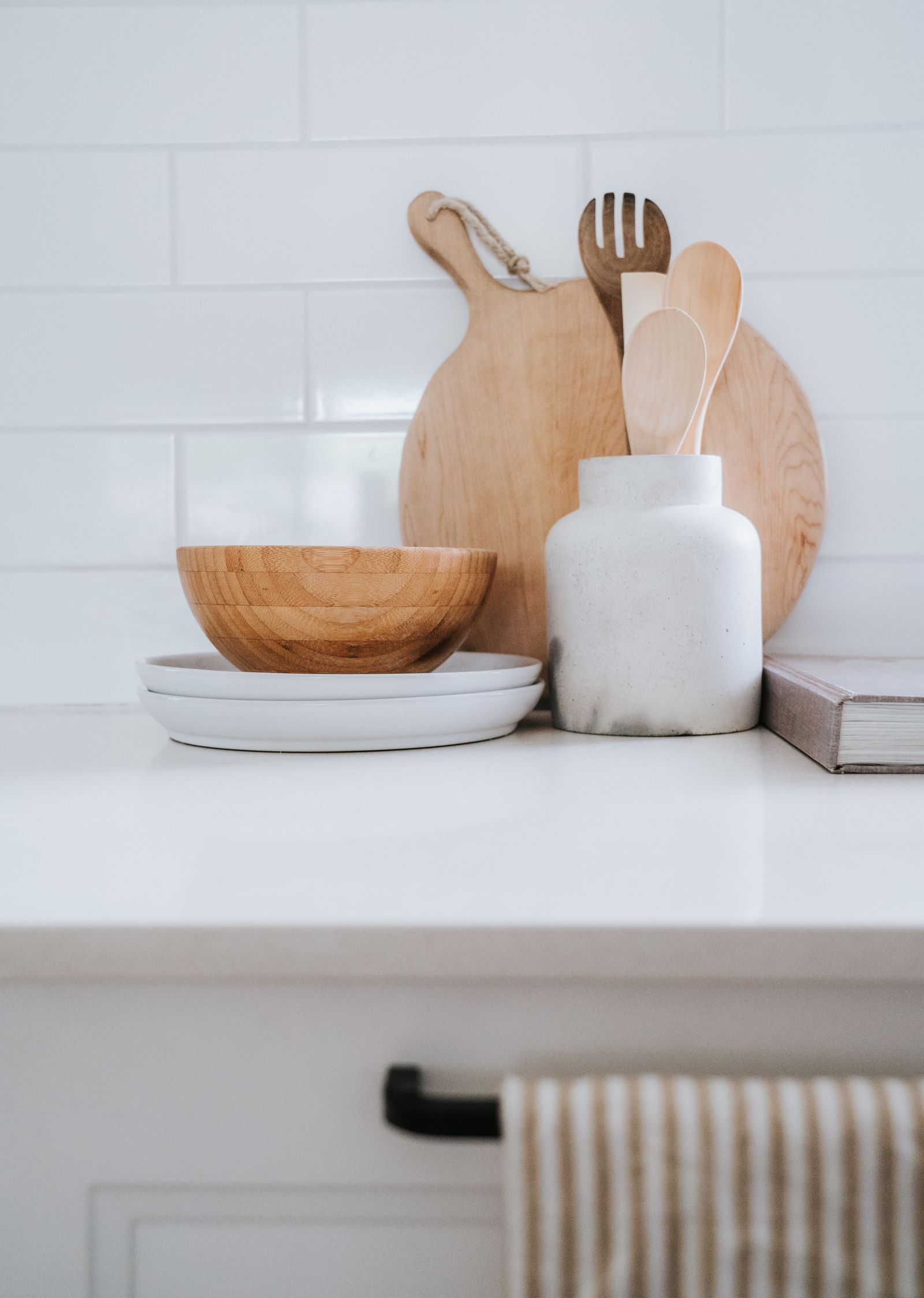
First, clear the counter and group what is left
Before you buy anything, take everything off the counter and clean it. Then group what came off: cooking tools in one group, food and spices in one group, dishes in one group, small appliances in one group. Now decide, with a calm head, what truly earns a spot on the counter. For most small kitchens, that is only the two or three things you use every single day. Everything else needs a home somewhere in this list.
If your problem is food storage with no pantry, we covered the slim rolling cart, shelf risers, door organizers and clear containers in detail in 12 Small Kitchen Organization Ideas When You Have No Pantry. This article is about the counter itself: how to win it back and keep it clear.
1. Hang a rail for utensils
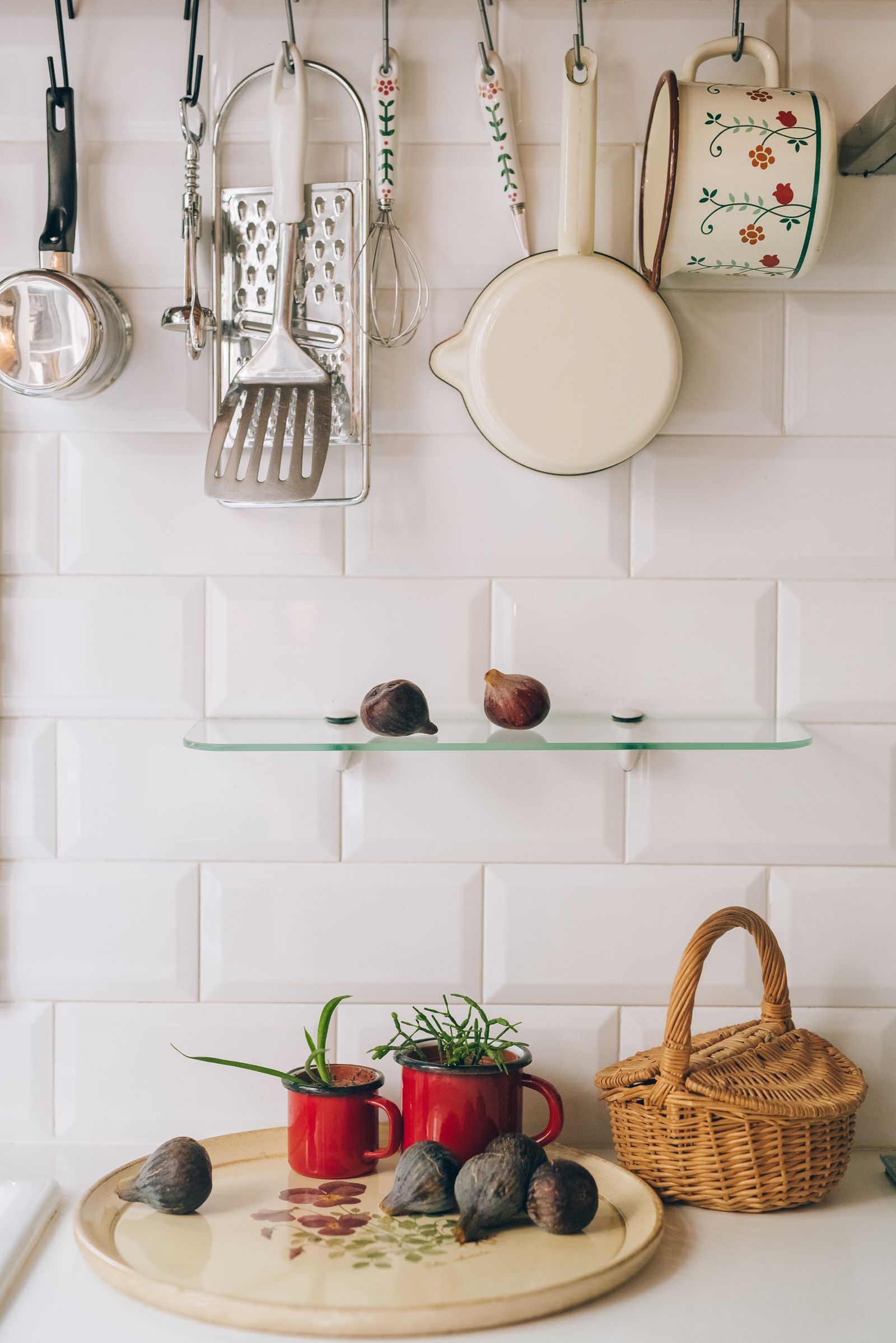
A simple wall rail with hooks holds spatulas, ladles, whisks, and measuring cups right where you cook. It empties the crowded utensil crock and the messy drawer in one move. Mount it near the stove, and your tools stop taking up counter and drawer space at the same time. If you rent and cannot drill, strong adhesive hooks or a tension rod with hooks will hold light utensils like spatulas and ladles without a single hole.
2. Move spices to a magnetic strip or the fridge
Spice jars eat cabinet space and get lost behind each other. A magnetic strip on the wall, or magnetic tins on the side of the fridge, keep spices visible and easy to grab. You can see every label at a glance, so you stop buying duplicates of spices you already own.
3. Give your small appliances a plan
Small appliances are the biggest counter thieves: the toaster, the blender, the air fryer, the mixer, all sitting out because putting them away feels like too much work. Give each one an honest plan. The one or two you use every single day earn their spot on the counter. The rest live somewhere else: inside a cabinet, up on a high shelf, or on a small cart in a corner. When an appliance has a real home, putting it back takes ten seconds, and your counter comes back to you.
4. Use an over-the-sink shelf or rack
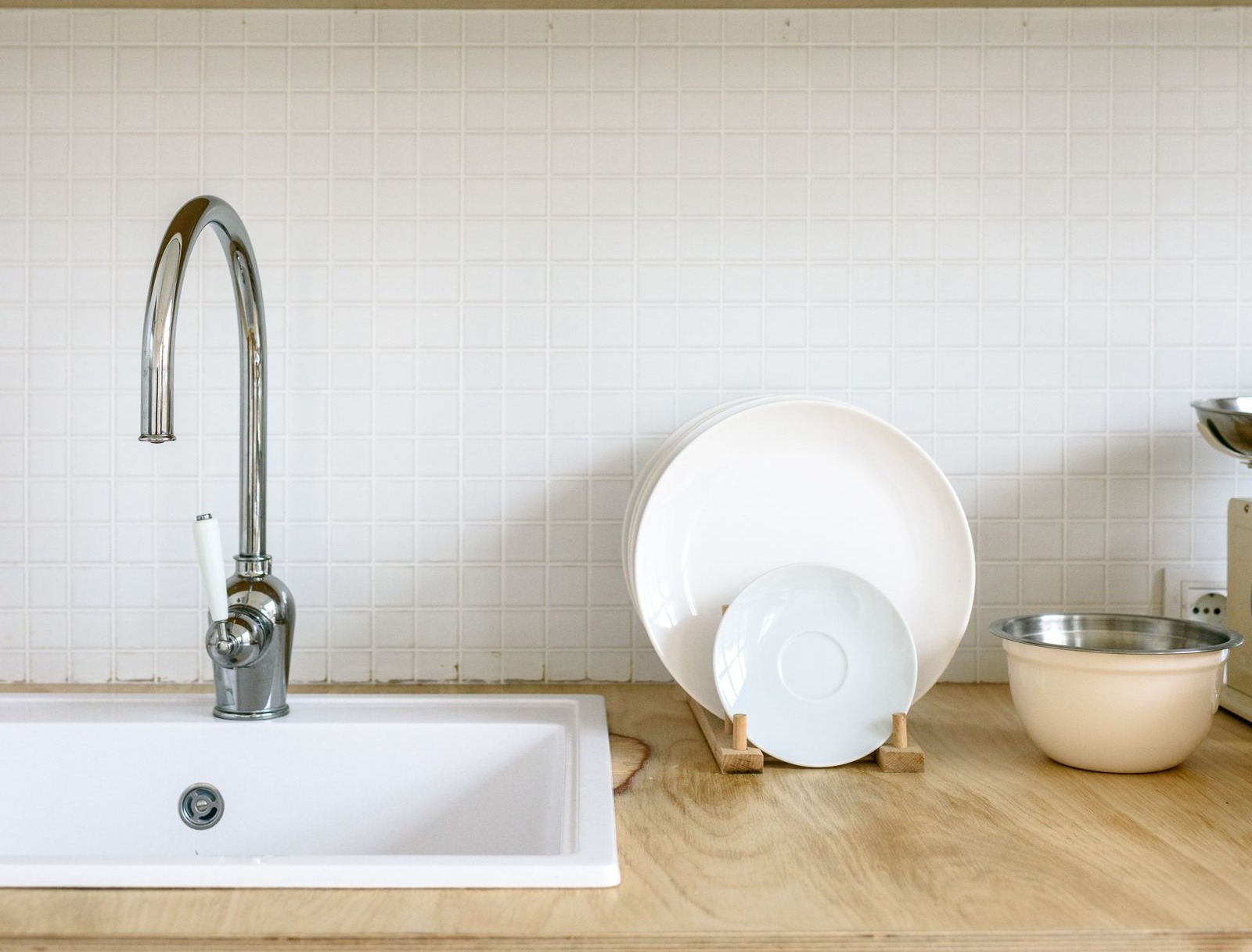
The space above the sink is free real estate. An over-sink shelf or dish rack gives dishes a place to dry without claiming the counter, and the top level can hold soap, a small plant, or the cups you use daily. In a tiny kitchen, this one change often frees the biggest patch of counter. If an over-sink rack doesn’t fit your sink, a slim upright plate rack beside it holds the same plates in a fraction of the counter space a full dish drainer needs.
5. Add under-shelf baskets
Small clip-on baskets hang under a cabinet shelf and catch the little things that wander: tea bags, sauce packets, snack bars, vitamins. They use the empty air under a shelf that most people never notice, and they keep small items out of drawers and off counters.
6. Send the rarely used things up high
Look at what is sitting on your counter and ask yourself when you used it last. The big holiday platter, the seasonal bakeware, the blender base: if the answer is almost never, they are charging rent on your counter. The space above the cabinets holds them well, in matching baskets or boxes, so the row looks planned instead of dusty and random. Everyday things stay down low where your hands can reach them easily, and the rare things go up high, out of the daily way.
7. Mount a knife strip on the wall
A knife block is a quiet counter hog. A magnetic knife strip on the wall keeps knives safe, visible, and off the counter completely. It also frees a drawer, which in a small kitchen is always welcome. If you rent, skip adhesive strips for knives: an in-drawer knife organizer is the safer home, because nothing sharp should depend on glue to stay up.
8. Get pots and pans off the counter and out of the stack
Pots that live on the stovetop or in a wobbly stack eat space and patience. The ones you cook with most can hang from a rail or sturdy hooks near the stove, up off every surface; we show the full wall setup in our no-pantry kitchen guide. Be honest about weight here: heavy pans should never hang from adhesive hooks. If you cannot drill, a pan organizer rack inside a cabinet keeps them separated and easy to reach, and it is worth asking your landlord about two small screw holes, since they are usually simple to patch when you move.
9. Divide your drawers on purpose
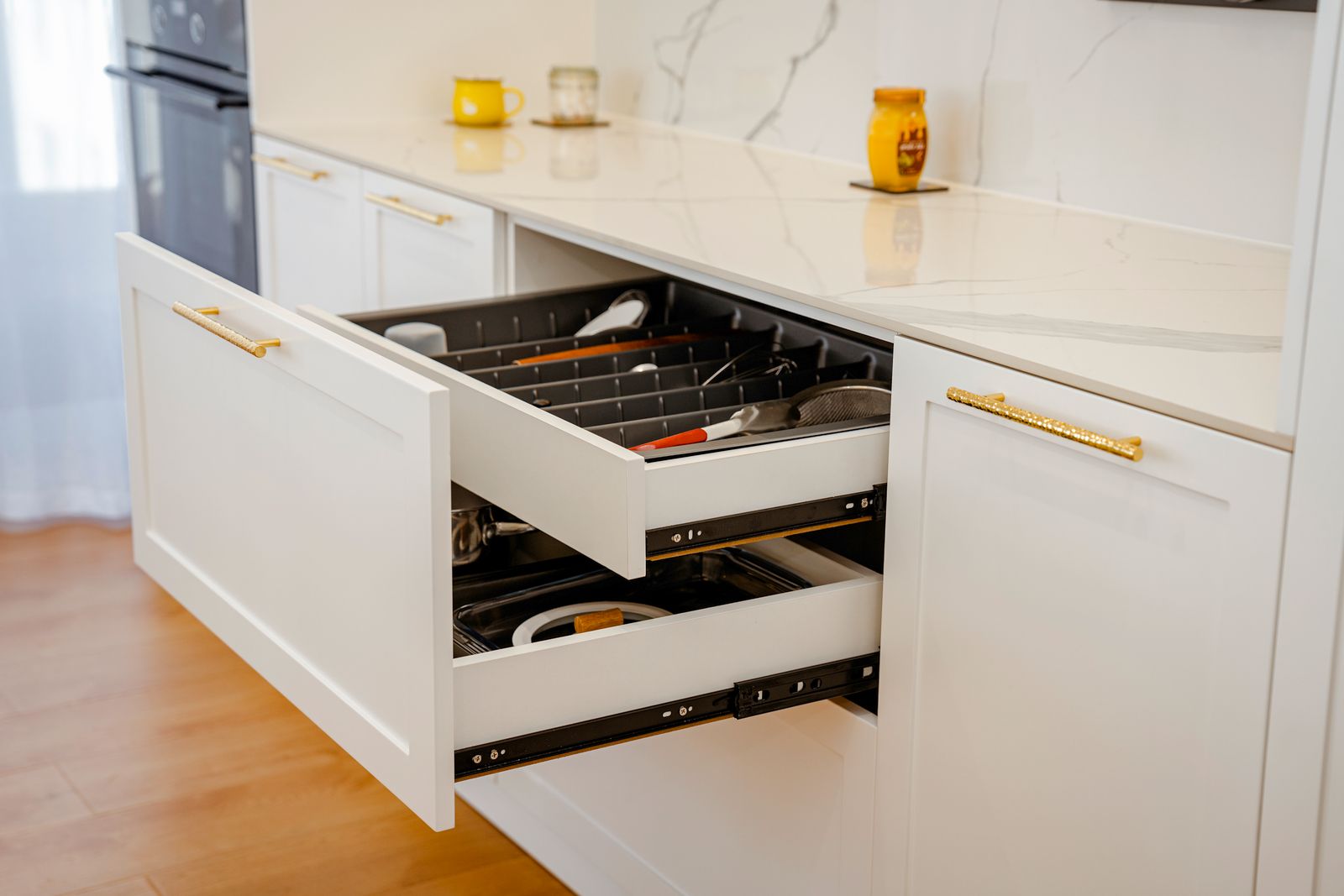
One small kitchen drawer can do the work of three when it is divided. Simple dividers give cutlery, tools, and junk their own sections, so the drawer opens to order instead of chaos. And here is the honest part: every small kitchen deserves one small junk section. Contained in a divider, it behaves. Spread across a whole drawer, it takes over.
10. Go vertical with a tall, narrow shelf
When floor space is gone, a tall and narrow shelf unit uses the wall height instead. It can hold a small pantry, cookbooks, baskets of fruit, or the appliances you use weekly. Narrow furniture respects the walkway, and the kitchen keeps its room to breathe.
11. Keep cleaning supplies under the sink, organized
The under-sink cabinet turns into a dark pile in most homes. A small caddy, a tension rod for spray bottles, or a two-level rack gives cleaning supplies a system. When cleaning things are easy to grab, wiping the counters takes two minutes, and a clean counter makes the whole kitchen feel bigger.
12. Turn the sink into extra work space
A cutting board made to rest over the sink, or a roll-up drying rack that opens across it, turns space you already have into prep space. Chop vegetables over the sink and the scraps fall where they are easy to rinse away. Roll the rack up when you finish, and the sink is a sink again. In a kitchen with almost no counter, this is found space.
13. Corral the coffee things on one tray
A coffee maker collects friends: the sugar jar, the filters, the mugs, the spoon resting beside them. Put them all on one tray and the whole group reads as one neat spot instead of five loose items scattered across the counter. A tray also lifts away in one move when you need the space, or when you want to wipe underneath.
14. Get the paper towels and dish soap off the counter
A paper towel roll standing on the counter takes more room than it deserves. A holder mounted under a cabinet, or one that hangs over a cabinet door, gives it a home off the surface instead. The dish soap and sponge belong in a small caddy at the edge of the sink, not wandering the counter. Two small moves, and another clean stretch of counter appears.
15. Set one simple counter rule
Ideas only work with one small habit behind them: the counter is for cooking, not for storage. Mail, keys, bags, and papers belong in the entryway, not next to the stove. When the counter holds only what helps you cook, the kitchen feels open every time you walk in, even on a busy day.
Questions people ask about small kitchen storage
How to maximize storage in a small kitchen?
Clear the counter first and group what is left by job, then move storage off the counter: utensils on a rail, spices on a magnetic strip, and the rarely used things up high. Under-shelf baskets turn one cabinet shelf into two, and every piece earns its place by being reachable.
What are some good storage ideas for a small kitchen cupboard?
Add under-shelf baskets so the tall space inside a cupboard works twice, and keep like with like in each cupboard: baking things together, everyday dishes together. If the cupboard is deep, a simple tray or bin you can pull out keeps the back from becoming a lost zone.
Where to store pots and pans in a small kitchen?
On the wall, on a rail or hooks, where they take no cabinet space at all and dry fast after washing. If wall space is tight, nest the pans with their lids stored separately on a door or a rack, and keep only the pans you use every week within reach.
That is the heart of The Cozy Footprint: a small kitchen can be beautiful, organized, and full of calm energy. When your space feels lighter, you feel lighter too.
Freeing up counter space starts with giving everything a home. Start with the counter itself, use the walls and doors you already have, and enjoy cooking in a kitchen that finally has room to breathe.
Want more cozy organizing help? Get the free Cozy Home Starter Kit.